A big thank you to Lionel Swee and Christian LeBlanc for inspiring me to write this article.
Before I get started. If you are someone who has visited an elephant trekking businesses, rode an elephant or had your picture taken with an elephant; I want you to know my intention in writing this article is not to offend or make you feel bad. I am guilty of unknowingly contributing to the exploitation of animals in my life, so I am not perfect. This article is about raising an awareness about an issue I feel should and can be stopped.
Updated 9 November 2026: This article reflects the concerns and personal reactions I wrote about in 2017. Sadly, elephant welfare remains a serious issue. A January 2026 assessment by World Animal Protection examined 2,849 elephants at 236 Thai tourism venues and reported that roughly two-thirds lived in poor conditions. This is a count from the surveyed venues, not all elephants in Thailand. The research also warns that elephant bathing and other hands-on “care” experiences may compromise welfare. Current welfare guidance favours observation-only experiences with room for elephants to roam and socialise rather than riding, performances or forced tourist contact. The older accounts and videos below remain a record of what prompted me to speak up.
SOME SHOCKING FACTS
When I first started learning about Thailand’s elephants, I was shocked by stories of declining wild populations and the numbers of animals living in captivity. Historical estimates vary and aren’t directly comparable with today’s tourism surveys, but the welfare concerns are very real.
THE CRUSH
Are you familiar with the elephant taming process known as “The Crush”? This starts when the elephants are just babies. They are taken away from their mothers and confined to space just large enough for them to fit into. This is usually a cage or a hole in the ground. They are trapped and unable to move. For several days the baby elephants are tortured in this tiny space by being stabbed, starved, beaten and deprived of sleep. This is done until the elephant’s spirit is completely broken and they submit to the humans. Once “The Crush” is complete, the elephant is now ready for humans to ride on top of them or be trained to perform tricks.
This is a video of a baby elephant being tamed in Thailand. I must warn you this is a very disturbing video.
ELEPHANT SHOWS
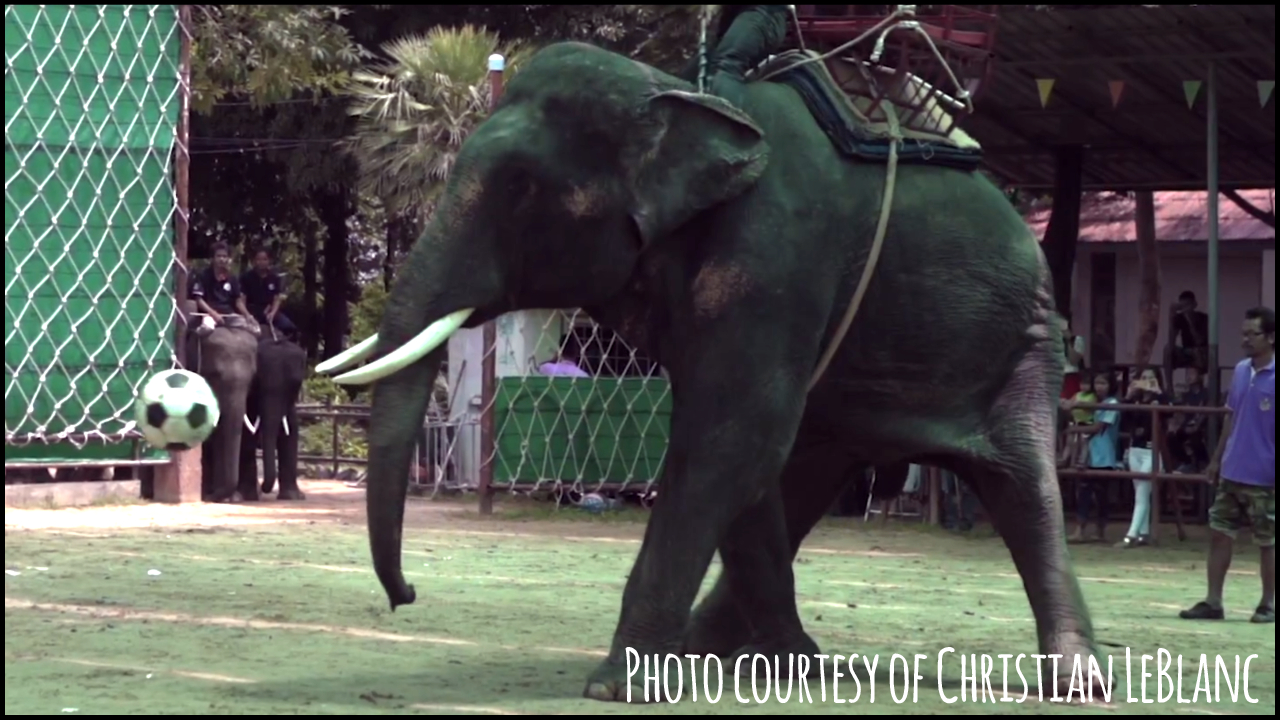
Before we went to Thailand we were well aware there was a problem with elephants being exploited for financial gain, and you know what, we didn’t really give it much thought other than “we would not be riding any elephants on this trip.” Being a vegetarian family these sort of decisions are pretty clear cut for us.
Two weeks of our holiday was spent in Phuket and I can tell you it’s very difficult to avoid seeing this nasty business at work. We first noticed the Phuket FantaSea show. This theme park does not try to hide the fact that they have elephants. In fact when you look at their website there are elephants dressed up in their show costumes all over it. Get this. When you go to make an online reservation they write “Our magic elephant, Iyara, will be happy to guide you through the reservation process! So not only do they have elephants, but they have a “magic” elephant. Please!
All over Phuket you will see pamphlets and flyers that have photos of the elephants that are ready to entertain you at Phuket FantaSea. Phuket FantaSea call themselves a Cultural Theme Park, but to me it seems their main attraction is the elephants they parade in these shows. What’s sad it this marketing strategy is clearly working as they continue to attract tourists every night to come see their show for a whopping 1800 Thai Baht (That’s $70 Australian Dollars).
To be clear, we did not go to Phuket FantaSea so you would be right in thinking I have made some assumptions about the place. Here is a video on YouTube you can briefly see how the elephants are used in the show. You can also see hundreds of comments on Trip Advisor with visitors that are disgusted with how they treat the elephants. What’s probably more disappointing is the comments coming from people saying what a great show it was. So as long as there are people ignorant to the fact that these animals have most probably been abused and are just used for financial gain, sadly Phuket FantaSea will continue to exploit these elephants. Phuket FantaSea claim they are Cultural Theme Park. I would like to see them cease using any elephants and other animals in their shows and find other ways to show visitors they are a cultural them park.
ELEPHANT TREKKING
Now here’s what we did see while in Phuket. While driving around the island we passed several elephants chained up and standing on the side of the road. We also drove past an elephant trekking business on the hill on the way up to the Big Buddha. This did not surprise us at all. We knew about it and expected it. What was shocking for us was to see how many tourists who didn’t seem to give it a second thought and where quite happy to pay to take a photo with an elephant or ride one on an elephant trek. It is really sad to see people do this with what seems to be an unconscious decision.
ELEPHANTS ARE NOT MEANT TO BE RODE
We know elephants are massive and it would be easy to think they can handle a few people riding on their back, but this is not the case. Riding an elephant is very bad for it’s spine and groups of people sitting their backs all day long will cause serious damage over time.
IS ELEPHANT TOURISM SAFE?
If you are thinking of getting up close to an elephant or riding an elephant you should ask yourself is it safe. Elephants appear to be gentle giants, but if things go wrong, I’m sorry to say you may not live to tell the tale. They can weigh up to 5,000kgs and if you are somehow stuck in their path there is nothing you can do to stop it. Here is an article about Scottish tourist Gareth Crowe thrown from an elephant and then trampled on. Sadly, he did not survive.
This video of a woman being flung into the air by an elephant shows you just how much power they have.
WHY I DECIDED TO WRITE THIS
While in Phuket I found it upsetting to see what was happening to the elephants. Knowing that so many people were prepared to pay to take part in these activities only meant this exploitation would continue. In a way I felt helpless and kind of accepted that this is just the way it was.
LIONEL SWEE
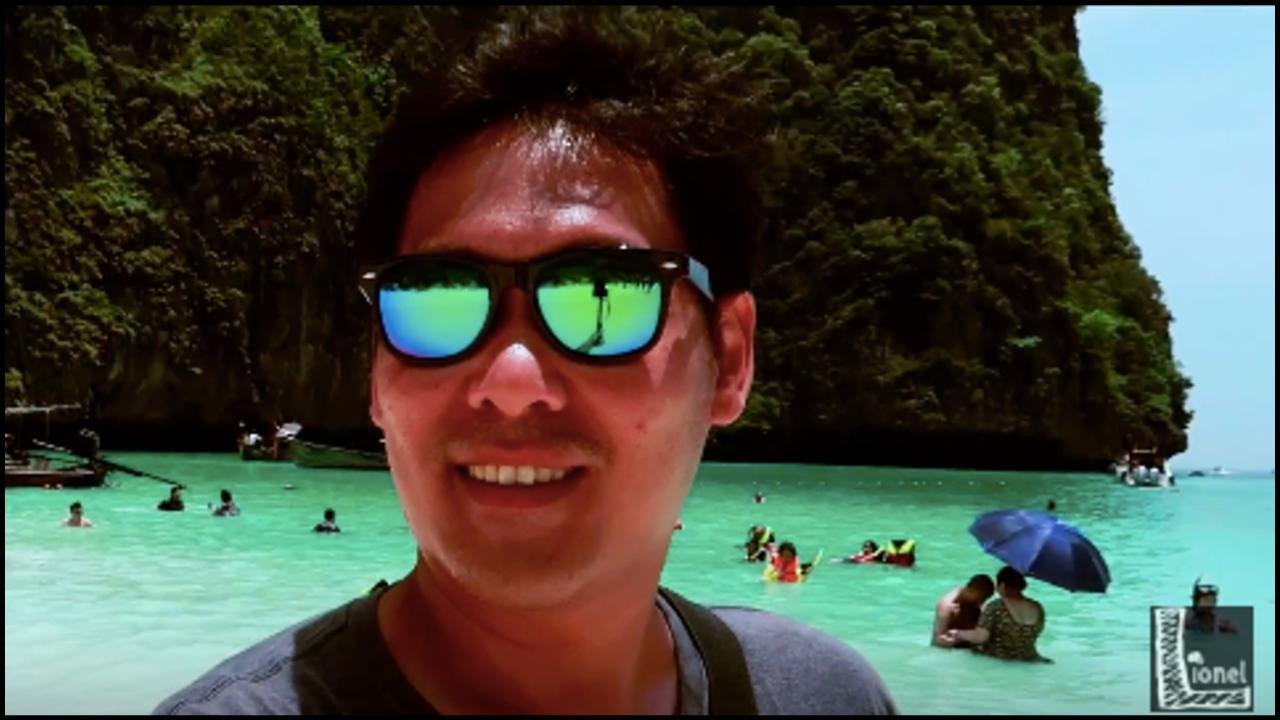
It wasn’t until I watched a video from fellow travel blogger Lionel Swee that motivated me to write this article and contribute to raising an awareness on this issue.
Lionel’s curiosity had him take a closer look at an elephant trekking attraction. After seeing an elephant tied up by its front and back legs, Lionel was really taken aback by what he saw and found it difficult to continue to vlog. This is obvious to me after watching his videos for so long and then seeing his reaction in his video. He is clearly upset with what he had seen. Lionel normally shares fun, light hearted videos, but this experience was so shocking for him, he couldn’t include it in his regular vlogs and he decided to make a short video dedicated to raising awareness on this issue titled “Stop Elephant Trekking!!! Please Spread the Word”. So here I am Lionel. Spreading the word.
What I love about Lionel’s video is that he suggests other options like taking an ATV or a boat if you want to see the jungles of Thailand. Hell, I say go for a walk in the jungle if you want to see the jungle. But lets be real. If you are on one of these elephant treks, you didn’t do it to see the jungles of Thailand. You did it to ride an elephant, one of the largest animals on the planet.
Subscribe to Lionel’s channel ‘Living Like Lionel’ here.
CHRISTIAN LEBLANC
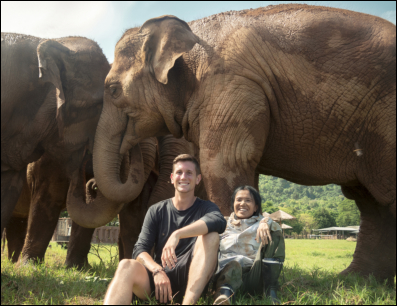
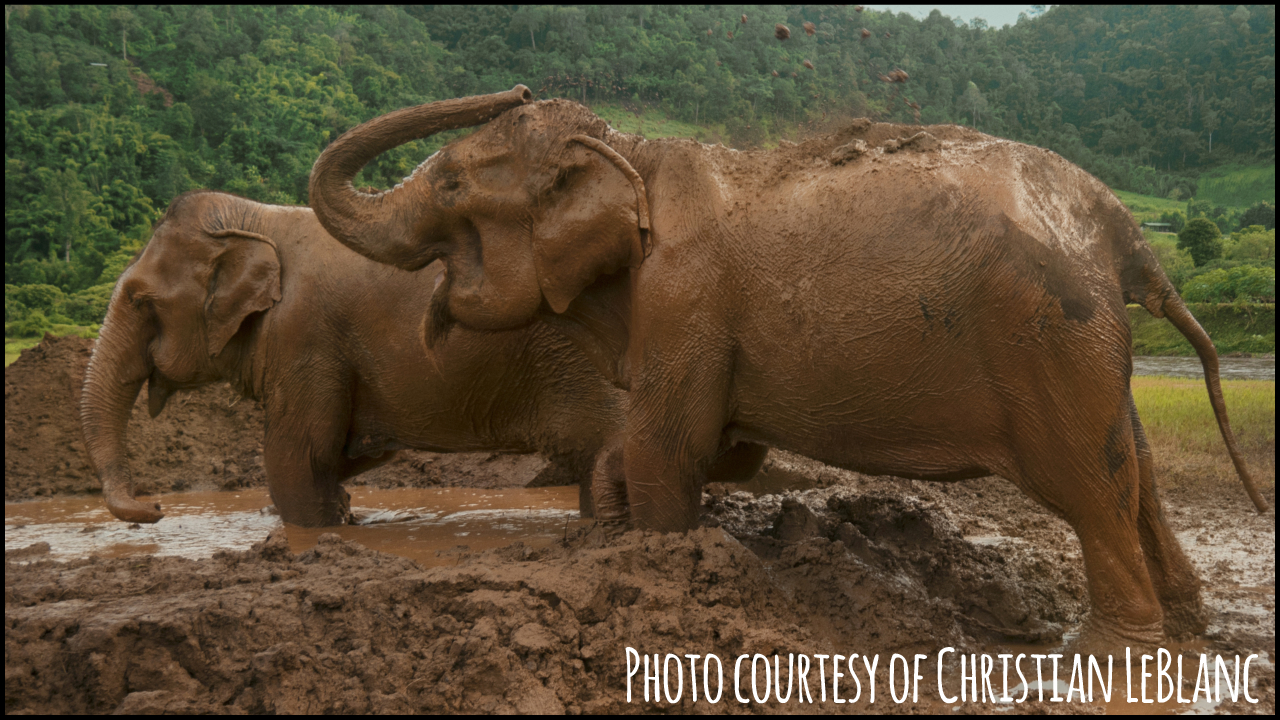
One of my favourite vloggers on YouTube, Christian LeBlanc was researching this issue and working on a documentary project titled “Black Tusk” at the time I wrote this article in 2017. He has travelled through most of South East Asia and has already created several videos related to this topic on his YouTube channel. His channel is called Lost LeBlanc and these videos are definitely worth watching if you want to learn more about what’s going on in Thailand in relation to elephant tourism.
In this video Christian visits the Surin province of Thailand to help rescue two elephants that need to be transported to Elephant Nature Park in Chiang Mai. Sadly he discovers a park that has numerous elephants tied to chains. It’s appalling!
Christian has also created some positive videos that highlight what is possible. Check out these videos to see what they do at Elephant Nature Park in Chiang Mai.
Subscribe to Christian’s channel Lost LeBlanc here.
WHAT CAN YOU DO TO HELP
Practical advice for 2026: A venue calling itself a “sanctuary” doesn’t automatically mean its elephants are treated well. Look for independent welfare guidance and places where visitors observe the elephants, without riding, bathing, touching or making them perform. This guide explains what to check before booking.
This issue is totally about money! Tourists need to change their behaviour in order to change the behaviour of these business owners. Tourists must stop spending money on elephant shows and elephant trekking! Instead, they should visit and support responsible, legitimate elephant sanctuaries. Over time there will be shift in what is the best way to profit from elephants. Yes, the Thai business owners will need to profit from the elephants. You may think this is a contradictory idea but at the end of the day these business owners will want to take care of themselves and their families. If it becomes more profitable to run an elephant sanctuary, we will see a shift from the current business models to ones that provide elephants with a safe haven, as well as provide future elephants protection from the inhumane practices that have been the norm in recent history.
There are organisations in Thailand working to prevent this treatment and protect elephants. If you want to see elephants in Thailand I encourage you to do some research before visiting. There are actually sanctuaries out there scamming tourists as they have captured wild elephants and tamed them to allow human contact. Some organisations helping elephants in Thailand I am aware of are Elephant Nature Park and Elephant Conservation Network.
It is my hope that after reading this you will not feel the need to ride an elephant or to see an elephant show. Particularly if you are visiting Thailand where the problem is so widespread. I also hope that you avoid other tourist attractions around the world that may be treating animals poorly just to make a few dollars.
If you know of any organisations doing good work for elephants, please share them below. I’d encourage everyone to research welfare practices independently before booking. You can also watch more of our original Phuket travel videos to see the wider trip during which we became concerned about elephant tourism.


We’d love to hear from you! ❤️